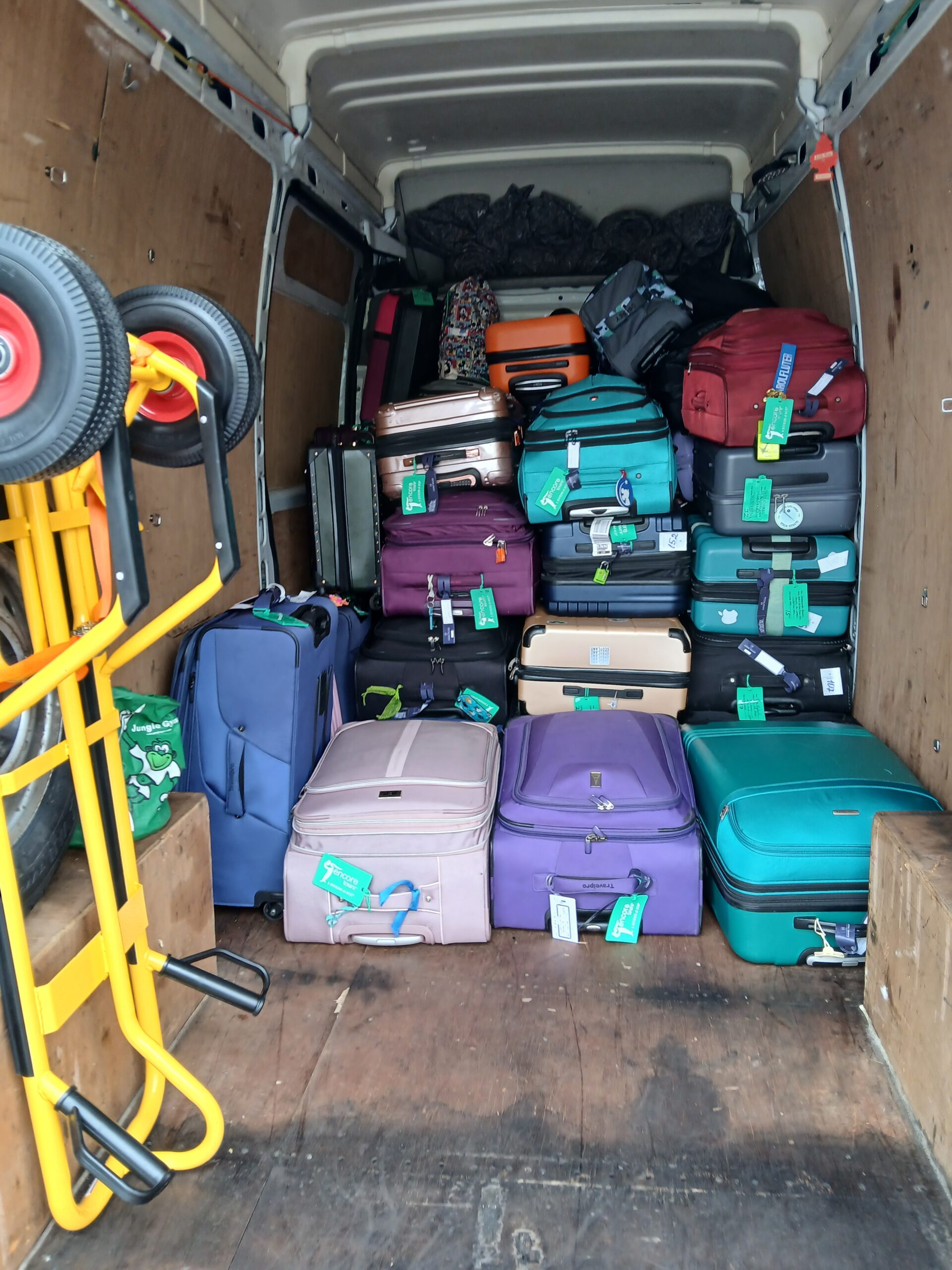
 A coach can pull up outside a hotel with 30 guests ready to leave, but the luggage is often still spread across a lobby, hallway, and several bedrooms. Moving luggage for tour operators is one of those jobs where timing matters as much as carrying capacity. A late collection can hold up the whole group, while rushed loading can lead to bags being left behind or damaged.
For local tours, airport transfers, hotel-to-hotel trips, and group travel across Limerick, Clare, and North Tipperary, a separate luggage van can take pressure off the driver and keep passengers more comfortable. The key is having a simple plan before anyone starts lifting bags.
Recent work included a multi-stop luggage transfer for a musical group visiting from Boston, with collections and deliveries between Shannon Airport, Galway, Waterford, Cashel and Dublin.
Why Tour Operators Need a Separate Luggage Plan
Luggage takes up more room than many people expect. A group of 15 or 20 travelers may have large suitcases, carry-ons, backpacks, golf bags, walking gear, strollers, or folded mobility equipment. Even if every item technically fits into a coach, loading it all can slow down each stop and reduce space for passengers.
A dedicated van is particularly useful when a group is traveling in a smaller minibus, when luggage needs to arrive at a hotel before the guests, or when there are several pickups from different locations. It also helps on tours where guests change accommodation regularly and the coach needs to stay focused on the route rather than luggage handling.
The right setup depends on the group. A small weekend group with overnight bags may only need one quick collection. A larger walking or golf group may need a long-wheelbase van and a more organized loading plan. There is no benefit in overbooking transport, but there is a real risk in trying to squeeze too much into a vehicle at the last minute.
Moving Luggage for Tour Operators Without Delays
The best luggage moves are planned around the schedule, not added as an afterthought. Start with the pickup point, the number of bags, and the time the group needs to depart. A hotel lobby might be easy to access early in the morning but busy at checkout time. A city-center stop may require a nearby loading point rather than stopping directly outside the entrance.
Give the driver a realistic collection window. If guests are asked to have bags ready by 8:00 a.m., collection at 8:15 a.m. may be more practical than expecting every suitcase to be waiting at 8:00 sharp. Tour schedules are often tight, but allowing a small buffer can prevent one missing bag from delaying everyone.
It also helps to confirm whether the luggage needs to travel with the group or ahead of them. Some operators arrange for bags to be delivered to the next hotel while guests enjoy a walking route, a sightseeing stop, or an activity that would be awkward with suitcases on board. In that case, the delivery time matters just as much as the pickup time. The receiving hotel needs to know the bags are coming and where they can be left safely for guests.
Get an Accurate Bag Count
“About 20 bags” is a useful starting point, but it is not enough for planning a vehicle. Ask for the number of large suitcases, smaller cabin bags, and any unusual items. One group of 20 travelers may have 20 compact cases. Another may have 20 large cases, golf clubs, and outdoor equipment that need far more room.
A simple luggage list avoids confusion. It can include the guest name, bag color or tag number, accommodation, and any item that needs particular care. The list does not need to be complicated. Its job is to make it easy to check that every bag collected is also delivered.
For groups moving between multiple hotels, sort luggage by destination before loading where possible. Loading bags for the first drop near the rear doors can save time later. It is a small detail, but it prevents unloading half the van just to reach two suitcases at the front.
Make Pickup Access Clear
Hotels, guesthouses, and event venues vary a lot. Some have a wide entrance and a convenient loading area. Others have narrow streets, limited parking, steps, lifts, or a busy reception area that cannot hold dozens of bags for long.
Before the day, confirm the address, the best entrance, parking arrangements, and the name of the contact on site. If there are access restrictions or a particular time when loading is permitted, share that early. This is especially helpful for collections in central Limerick, Ennis, or busy tourist locations where stopping space may be limited.
If guests will bring their own bags to the van, make that clear in advance. If hotel staff are gathering bags in one area, agree on where they should be placed so they do not block exits or get mixed with luggage from another group.
Careful Loading Protects Bags and Schedules
Luggage transport is not just a matter of filling every available gap. Heavy hard-shell cases should be loaded low and secured so they cannot shift during the journey. Softer bags and lighter items can go above or around them, while fragile equipment should be kept away from pressure points.
Avoid stacking valuable or delicate items where they may be crushed. If the group is carrying musical instruments, camera cases, mobility aids, or sports equipment, mention it before collection. A van can carry a good load, but the loading approach should suit what is actually being moved.
Clear labeling matters too. Matching tags on bags and a written manifest reduce the chance of a suitcase being delivered to the wrong hotel. For multi-day tours, operators may find it useful to use a simple colored tag system for each accommodation stop. It is quicker to spot a wrong bag before the van leaves than after it has traveled across the county.
When a Local Van Service Makes Sense
A flexible local van service can be a practical option when the job is too large for a car but does not need a full removals crew. It suits one-off group trips, seasonal tours, accommodation changes, airport-related luggage runs, and extra capacity when a regular vehicle is full.
The benefit of an owner-operated service is direct communication. You can explain the route, timing, access, and bag count to the person handling the job instead of passing details through several people. With Man with a Van Seamus, each booking is handled personally, which can make a real difference when plans change or a collection needs to be adjusted.
That said, a local van is not always the answer. If all luggage fits safely in the group vehicle and there is enough time for loading, keeping everything together may be simpler. A separate vehicle becomes worthwhile when it creates more passenger room, protects the timetable, or makes a complicated transfer easier to manage.
Questions to Settle Before Booking
Before arranging transport, have the basic details ready: the collection and delivery addresses, the date, pickup and delivery times, the number and type of bags, and any special items. Include whether there are stairs, restricted access, or a contact person at each end.
It is also worth agreeing on what happens if the group runs late. Tour itineraries can change because of traffic, delayed flights, weather, or a longer-than-planned stop. A quick call as soon as there is a delay gives everyone a better chance to adjust. Waiting until the original pickup time has passed makes the situation harder for both the driver and the tour organizer.
For repeat tours, keep notes after the first run. Was the bag count accurate? Was the collection point easy to reach? Did one hotel need more notice than another? These small lessons make the next trip quicker and less stressful.
A well-run luggage move should feel almost invisible to guests. Their bags are collected, handled carefully, and waiting where they are expected to be. For tour operators, that starts with a clear plan and a quick quote arranged before the coach is at the curb.